Avg. downloads per episode
What is average downloads per episode?
Average downloads per episode is total podcast downloads in a period divided by the number of episodes published in that period. It is one of the most common podcast metrics used in media kits, sponsor pitches, and ad pricing. Podcasters, producers, and networks use it to track show growth, compare against goals, and estimate how much sponsorship revenue each episode can earn.
Avg. downloads per episode
Total downloads ÷ episodes published
Embed this free calculator on your website—copy the snippet after signup and keep the Built with Calclet link for attribution (or upgrade to remove branding).
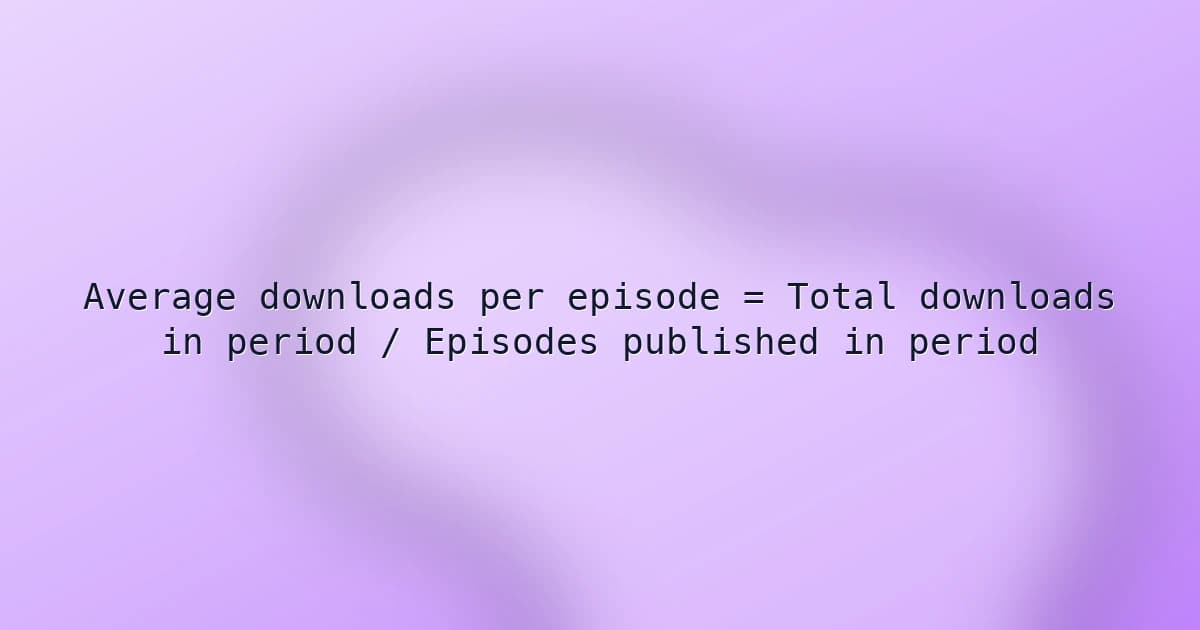
Downloads per episode formula
Divide total downloads in the period by the number of episodes released in the same period.
Average downloads per episode = Total downloads in period / Episodes published in period- New-episode average = (Total downloads - Back-catalog downloads) / Episodes published.
- Many sponsors prefer downloads per episode within the first 30 days after release for a consistent comparison.
- Sponsorship revenue per episode = (Downloads per episode / 1,000) x CPM x Number of ad slots.
Inputs explained
Pull both numbers from your podcast host (such as Buzzsprout, Libsyn, Transistor, or Spotify for Creators) for the same date range.
- Total downloads (period)
- All downloads recorded in the period. This usually includes downloads of older episodes, which inflates the per-episode average. For sponsor reporting, use downloads of the period's new episodes or 30-day downloads per episode if your host provides them.
- Episodes published in period
- Full episodes released during the period. Decide whether trailers, bonus episodes, and reruns count, and apply the same rule every time.
Example downloads per episode calculation
A podcast records 186,000 downloads in a quarter and publishes 12 episodes, an average of 186,000 / 12 = 15,500 downloads per episode. If 40% of those downloads came from older episodes, new episodes averaged about 9,300 downloads each. At an $18 pre-roll CPM and two $25 mid-roll slots, a 9,300-download episode earns about $632 in sponsorship revenue.
Put this calculator on your site
We'll copy this tool into your Calclet account—tweak branding and fields, then paste the embed on WordPress, Webflow, Shopify, or any HTML page. Every embed can link back to Calclet for discovery.
How to use the avg. downloads per episode
- Input total downloads (period) from your hosting analytics export for the exact calendar window you disclose to sponsors.
- Input episodes published in period using consistent rules for what counts as a primary episode versus trailers and bonus cuts.
- Review average per episode as a planning headline for rate cards and inventory forecasting.
- Compare trailing averages against median episode downloads when a few viral releases distort simple means.
Common downloads per episode mistakes
- Including back-catalog downloads and overstating new-episode performance to sponsors.
- Comparing a 7-day download number with another show's 30-day number.
- Letting one viral episode inflate the average instead of also reporting the median.
- Counting trailers and short bonus episodes in some periods but not others.
- Treating downloads as unique listeners, when auto-downloads and multiple devices add duplicates.
- Mixing YouTube views with podcast downloads without labeling them separately.
Podcast downloads averaging context
- Downloads versus listeners definitions
- Hosting platforms differ on whether metrics reflect plays, downloads, or IAB-aligned guidelines; consistent methodology matters more than cross-show headline comparisons.
- Catalog listening effects
- Older episodes accumulate ongoing downloads, which can inflate period totals relative to newly published episode counts depending on reporting windows.
- Seasonality and guest spikes
- High-profile guests and cross-promotions create outlier episodes, so rolling averages often accompany sponsor reporting alongside median episode performance.
FAQs
My average downloads per episode looks high—is back-catalog listening inflating it?
Probably. Total downloads include listens to older episodes, which get divided across only the new ones. If 40% of 186,000 quarterly downloads came from older episodes, new episodes averaged about 9,300 downloads instead of 15,500. Use per-episode or 30-day downloads from your host for sponsor reporting.
Which downloads number should I give sponsors: 7-day, 30-day, or all-time?
Many advertisers and networks prefer downloads within 30 days of release because it gives a consistent, comparable figure across shows. Seven-day numbers are useful for quick reads but understate total reach, and all-time numbers keep growing for older episodes. State clearly which window you use in your media kit.
How much sponsorship revenue can my podcast earn per episode?
Multiply downloads in thousands by CPM for each ad slot. At 9,300 downloads with an $18 pre-roll and two $25 mid-rolls, revenue is about $632 per episode, or about $7,589 for 12 episodes. Using the inflated 15,500 average would suggest about $1,054 per episode, which sponsors may notice when results come in.
One viral episode is skewing my average—how should I report it?
Report the median or an average without the outlier alongside the overall figure. If one episode had 50,000 downloads out of 186,000, the other 11 averaged about 12,364. Sponsors buying across several episodes care more about typical performance than one spike.
How do I measure whether my podcast is growing?
Compare downloads per episode over the same window length and episode type. If last quarter averaged about 11,538 downloads per episode (150,000 over 13 episodes) and this quarter averages 15,500, that is about 34.3% growth. Also track 30-day downloads for new episodes so back-catalog growth does not hide flat new-episode performance.
Will publishing more episodes lower my downloads per episode?
Often, yes, but total downloads may rise. Moving from 12 to 24 episodes a quarter with 200,000 total downloads lowers the average to about 8,333, even though total downloads grew. Decide whether sponsors buy per episode or by total impressions, and pick a cadence that grows total reach without burning out your audience.
How long will it take to reach 10,000 downloads per episode?
Estimate your monthly growth rate and project forward. Growing from 9,300 downloads per episode at about 5% a month reaches 10,000 in roughly 1.5 months. At slower growth, it takes longer, so test cross-promotions, guest swaps, and clips on social video to speed things up.
Are podcast downloads the same as listeners?
No. One listener can generate multiple downloads across devices, and automatic downloads may never be played. Downloads per episode is a standard industry measure for advertising, but unique listener or audience estimates are usually lower. Use host analytics that follow common measurement guidelines, and do not present downloads as listeners.
Should YouTube views count toward downloads per episode?
Report them separately. YouTube views and podcast downloads are measured differently, and sponsors often price them differently. Show audio downloads per episode and video views per episode side by side, and only combine them if a sponsor specifically buys across both.
Should trailers and bonus episodes count in my episode total?
Pick a rule and apply it consistently. Short trailers and bonus clips usually get fewer downloads and lower your average if included. Many podcasters count only full episodes for sponsor metrics and report bonus content separately.
Related calculators
Related guides
Step-by-step articles on building, embedding, and ranking calculator pages like this one.
Category: Podcast audience measurement and monetizationTopics: Downloads per episode, Podcast media kits, Sponsor pricing inputs
Last reviewed: 2026-05-07
Reviewed by: Souhayb Kama Ldine